
1. Why is E-Learning important in employee training?

Why do businesses need to train their employees?
Employee training is key to helping businesses enhance their competitiveness and achieve sustainable growth. When employees are equipped with the necessary knowledge and skills, they work more efficiently and contribute to innovation and process improvement.
➤ Training helps increase employee engagement, reduce turnover, and ensure the team remains adaptable to the rapidly changing market, becoming a crucial part of a company's long-term development strategy.
1
Save on training costs.
E-learning helps businesses significantly reduce traditional training costs such as venue rental, instructor fees, and printing costs. With digitized content, businesses only need to invest once but can use it long-term and expand their student base.
2
Overcoming geographical barriers
Online training allows employees everywhere, including provincial branches or those working remotely, to easily access learning content. The e-Learning system has been developed into mobile applications, enabling learners to access it anytime, anywhere.
3
Blended Learning – Combined Training
As in-person classes resumed after the pandemic, many businesses opted for a blended learning model: a combination of online and traditional classroom learning. This helps maintain direct interaction while keeping costs low and offering flexibility in terms of time.
4
Microlearning – Learn small, absorb big
One prominent trend is microlearning: content is divided into small modules (typically 3–7 minutes), making it easy to absorb and suitable for employees' busy schedules. This is an ideal method for updating skills and knowledge without interrupting work.
2. Key E-Learning Trends Shaping Human Resource Development
In fact, the E-Learning trend is shaping how employees are trained in businesses: personalized learning paths, gamification, immersive learning (AR/VR), collaborative learning, microlearning, AI (Gen AI), mobile learning, and continuous learning.
✦ Personalization: Employees receive personalized training based on their roles, skills, and career goals.
✦ Immersive Learning (AR/VR): Virtual reality technology helps simulate real-world work environments (such as factories and warehouses) for safety training or specialized skills development.
✦ Gamification:Applying games to learning, increasing engagement and interest.
✦ Collaborative learning: Employees learn in groups, discussing, sharing, and solving problems together.
✦ Microlearning: Small, concise, and easy-to-remember lessons.
✦ AI (Gen AI): Utilizing artificial intelligence to personalize content and analyze learning data.
✦ Mobile Learning: Learn via your phone, anytime, anywhere.
✦ Continuous learning: Encouraging lifelong skill development, not just short-term training.
3. Challenges and solutions when applying E-Learning in human resource development
Challenge

Difficulties in direct interaction.
Some businesses remain concerned that employees learning online will have less interaction and engagement with instructors or colleagues.
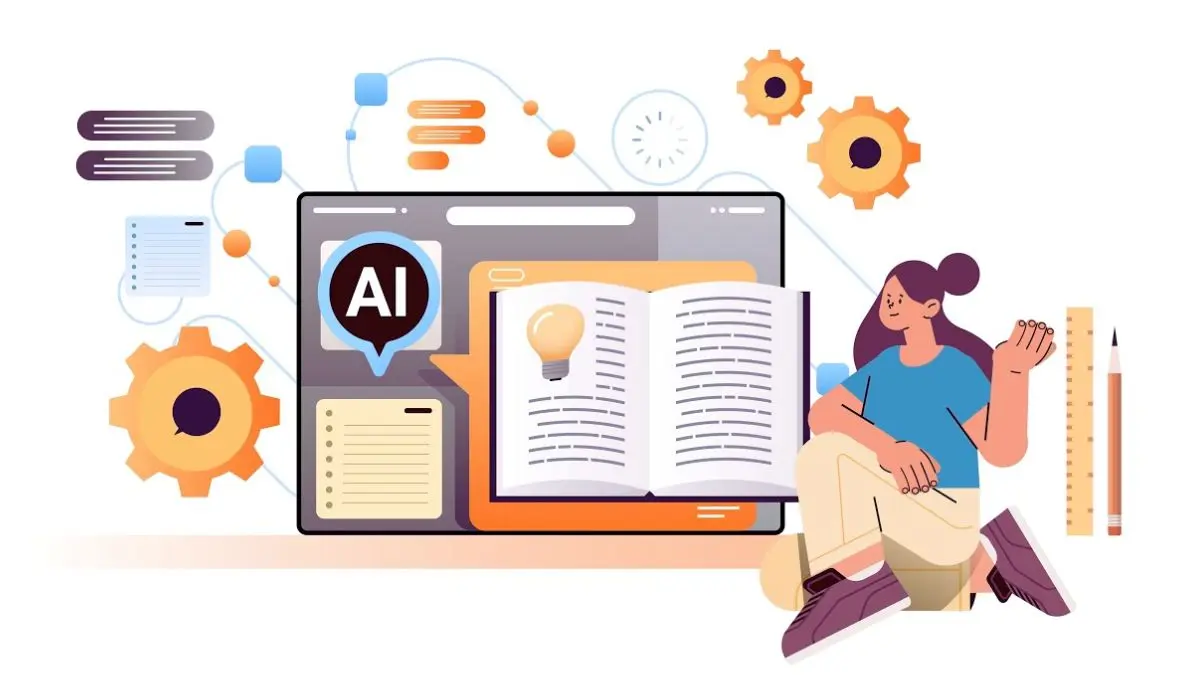
Lack of personalized learning paths
If not designed properly, E-Learning can become generic and unsuitable for the needs of employees in each position.

Training ROI is difficult to assess.
Due to the initial investment costs (digital content creation, LMS), many e-learning companies are concerned about the unclear effectiveness if not properly measured.
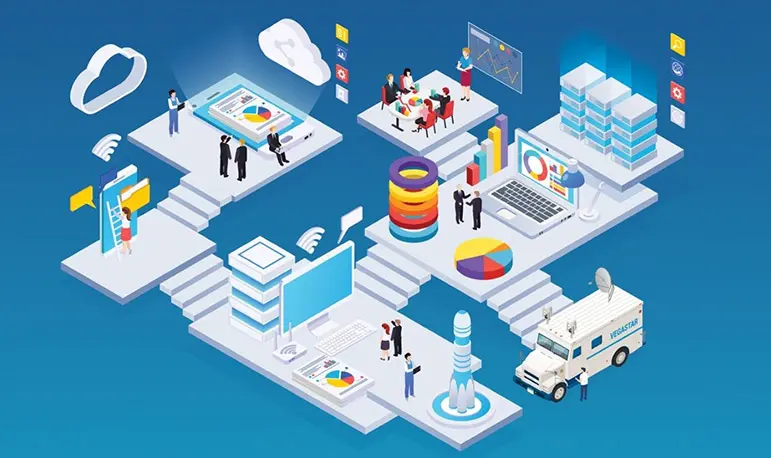
Technology infrastructure requirements
Some employees/branches lack good internet connectivity or suitable equipment, which reduces the effectiveness of online learning.
Solution
✦ Develop a digital training strategy: Businesses need to analyze staffing needs (skills gap) before implementing E-Learning, in order to invest correctly in online and offline learning pathways.
✦ Use flexible and personalized LMS: Choose a learning management system (LMS) platform that offers personalization, progress reporting, and relevant content recommendations.
✦ Measuring training effectiveness: Establish training KPIs such as course completion rate, level of knowledge application to work, and training ROI to monitor and continuously improve.
✦ Invest in digital infrastructure and skills: Businesses should support employees with equipment and internet connectivity, and provide training in self-learning skills and effective e-Learning.
4. Applying e-Learning: How businesses can enhance their workforce capabilities.
➤ CLS E-Learning
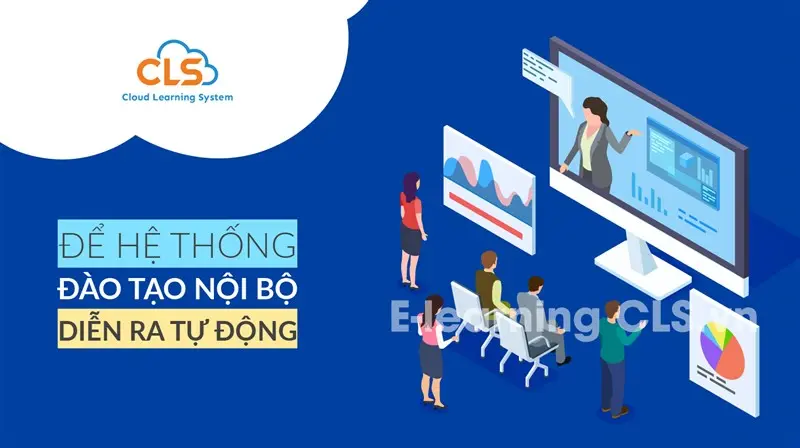
CLS is an e-Learning platform for businesses in Vietnam, chosen by many companies for internal employee training. According to the CLS website, their e-Learning system helps businesses monitor learning progress, store knowledge, build competency frameworks, and provide real-time reports to managers.
✦ CLS E-Learning also claims that this solution helps businesses save up to 80% on training costs compared to traditional methods. With features such as automatic online testing and exams, and the ability to build internal learning pathways, businesses can train new employees and update the knowledge of existing employees quickly, synchronously, and effectively.
✦ CLS allows businesses to build competency frameworks for each position, helping employees learn on the right path and develop effectively. Detailed reporting supports managers in monitoring progress and optimizing L&D plans. Simultaneously, internal knowledge is digitized and stored, ensuring it is not lost when personnel changes.
➤ Retudy

Retudy
Retudy is an e-Learning platform based on the microlearning model, chosen by many businesses and organizations to train their employees flexibly and effectively.
✦ By dividing content into short lessons of 3–7 minutes, Retudy allows employees to learn anytime, anywhere without interrupting their work, while also increasing their ability to absorb and retain knowledge. Businesses can also quickly update lessons when there are changes in processes or new knowledge, ensuring that the staff always stays informed.
✦ Retudy also helps businesses optimize training costs compared to traditional methods by reducing the need for in-person classes, saving on instructors, classrooms, and employee time. Detailed reporting systems and automated tests allow managers to easily track learning progress, evaluate effectiveness, and adjust L&D pathways to suit each position.
Conclude
The application of e-Learning in training and human resource development is currently a 20th-century trend, not only helping businesses save costs but also improving efficiency, fostering employee engagement, and sustainably developing skills. However, to maximize the benefits, businesses need to build a clear strategy, choose appropriate technology, measure effectiveness, and ensure the necessary technical infrastructure. When implemented correctly, e-Learning will be key for organizations to build a modern, flexible workforce ready to face future challenges.