
1. What is E-Learning?
E-Learning (Electronic Learning) is a method of learning and teaching through electronic devices connected to the Internet, such as computers, smartphones, or tablets. Unlike traditional learning models that require physical presence in a classroom, E-Learning allows learners to access materials, courses, and training programs anytime, anywhere, with a high level of interactivity and autonomy in choosing their learning pace. E-Learning courses are often designed with a clear structure, incorporating a variety of content formats such as text, images, audio, simulations, or gamification to create an engaging experience and enhance retention. Additionally, learners can interact with instructors and peers through forums, discussion rooms, or online classes, helping to maintain social connections even without face-to-face meetings.
As a result, E-Learning not only provides flexibility but also creates a modern, personalized, and more effective learning environment.

| The Development of E-Learning
E-Learning emerged in the 1990s with the advent of Learning Management Systems (LMS) and experienced significant growth after the COVID-19 pandemic. The development of online platforms along with new learning models such as microlearning and MOOCs has made E-Learning more flexible, diverse, and better suited to the learning needs of the digital age.
➤ The E-Learning system usually consists of three main parts:
Learning Management System (LMS)
It is a central platform that helps organize and manage courses, track learning progress, and assess student outcomes. The LMS also supports interaction between instructors and learners through tools such as forums, messaging, assignments, and online tests.
Learning Content Management System (LCMS)
Allows the creation, storage, editing, and distribution of multimedia learning resources such as videos, documents, lectures, or quizzes. LCMS helps ensure that content is always up-to-date, easily accessible, and aligned with the needs of learners.

Authoring Tools
These are software programs like PowerPoint, Adobe Presenter, or Prezi, which assist instructors in designing visual, dynamic, and highly interactive lessons. These tools help transform dry content into engaging, understandable, and more effective learning experiences.
2. Outstanding Benefits of E-Learning
➤ Benefits for individuals (Students, pupils, and working professionals)
✦ Flexibility in time and location: Learners can participate in online courses from anywhere. This is especially beneficial for students with a busy schedule, learners needing to review outside of class hours, or working professionals who want to enhance their skills without affecting their jobs.
With E-learning, learners do not need to spend money on transportation, printing, or accommodation. Many online courses are even free or only cost a few hundred thousand dong, helping to save millions of dong each year compared to traditional learning methods.
Thanks to the integration of AI and learning data analysis, the system can suggest content tailored to each individual — from students who enjoy dynamic videos to professionals who need concise specialized skills.
➤ Benefits for businesses
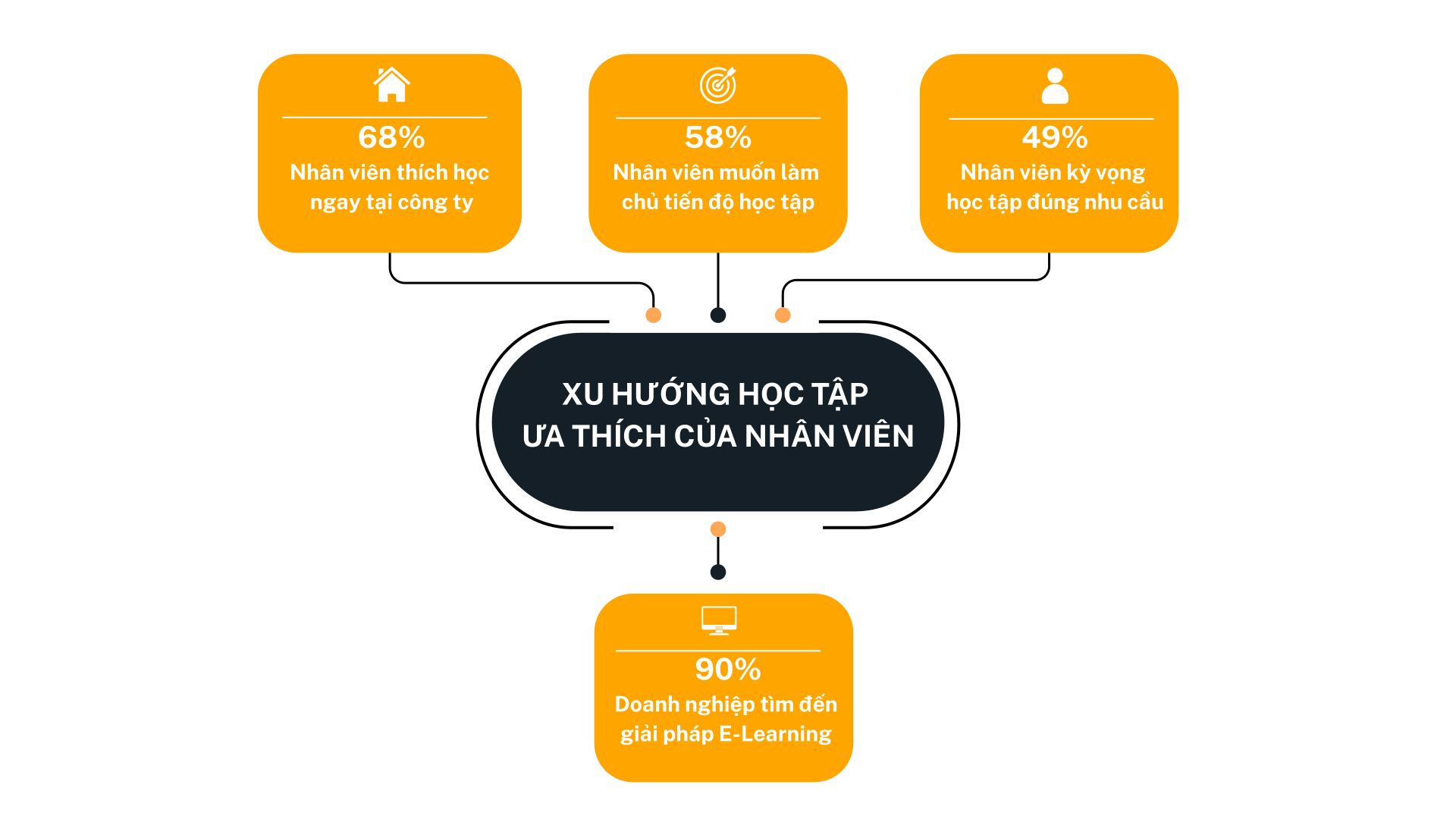
According to the Workplace Elearning Report 2018 conducted by LinkedIn on a global scale with 4,000 participants
✦ Effective and cost-saving internal training: Businesses can build a unified E-learning system for all employees, helping to reduce training costs by 50–70% and shorten learning time by 25–60% compared to traditional classrooms.
✦ Real-time assessment and reporting: LMS platforms help track learning progress, automate grading, and issue certificates, thereby enhancing workforce quality by 130–150%.
✦ Easy to update content: Online courses can quickly adapt to new market trends — for example, training in digital skills, AI skills, and data management for employees without needing to reorganize the entire program.
Thanks to features such as forums, chat rooms, webinars, and E-learning, businesses can organize large-scale training while ensuring interaction and connection between employees and instructors.
3. The current state of E-Learning development in Vietnam
In Vietnam, eLearning is developing rapidly, especially after the COVID-19 pandemic, with a boom in both domestic and international platforms tailored to meet local needs. According to recent reports, the Vietnamese eLearning market is expected to reach a revenue of 397.53 million USD by 2025 (Statista, 2025), with a CAGR growth of 12.08%, thanks to the diversification of platforms serving everything from general education to corporate training.
➤ Enterprise

Retudy is a prominent e-learning platform in Vietnam, aimed at providing a modern, flexible, and accessible learning experience for everyone. The application offers outstanding features such as:
✦ Short learning videos (micro-learning): help learners quickly and easily grasp knowledge, suitable for the mobile learning trend.
✦ Track learning progress: the roadmap and learning progress management system helps maintain motivation to study every day.
✦ Community interaction: allows students to discuss, comment, create groups, and connect with each other to share learning experiences.
With the goal of "everyone can learn, everyone can understand," Retudy is becoming a prime example of the digital learning trend in Vietnam, contributing to the promotion of an active, flexible, and personalized learning model for learners of various ages and fields.
| FPT
FPT (50,000 global employees) faces high logistics costs, a fixed schedule, and COVID-19 disruptions; before 2020, only 20-30% of training used online tools, resulting in a low completion rate (70%).
✦ Solution: Launched FPT.eLearning (part of FPT PeopleX) since 2018, integrating AI, VR/AR, multi-device LMS; supporting customized pathways, real-time assessments, synchronous/asynchronous learning; deploying SaaS for partners such as Viettel, Vingroup.
✦ Results: Reduce costs by 50-70%, shorten training time by 25-60%; increase engagement by 130-150%, completion rate 90%
➤ Education

Edumall
Focusing on practical knowledge with over 1,500 courses from renowned instructors, Edumall is ideal for students preparing for exams and professionals looking to enhance their career skills.

Vuihoc.vn
Vuihoc.vn was established to address the limitations of access to quality education in remote areas, with over 1,500,000 students using it, in collaboration with AI from Creverse.
The future of E-Learning
E-Learning is ushering in a smarter and more comprehensive era of learning than ever before. Thanks to the development of artificial intelligence (AI), big data, and virtual reality (VR/AR), learners will have personalized learning experiences tailored to their abilities, interests, and individual pace. Instead of just learning through videos or documents, they can engage in interactive simulations, virtual classrooms, or training with AI assistants, making learning more vibrant and realistic.
For businesses, E-Learning will not only be a training tool but will also become a platform for developing employee capabilities and building a culture of continuous learning. Intelligent learning systems will help measure training effectiveness, suggest skill pathways, and automatically update content according to trends. In the context of a strong digital transformation,
E-Learning is the key that helps individuals, organizations, and society as a whole quickly adapt to changes, aiming for an open, flexible, connected, and sustainable education system.
"The beautiful thing about learning is that no one can take it away from you."
